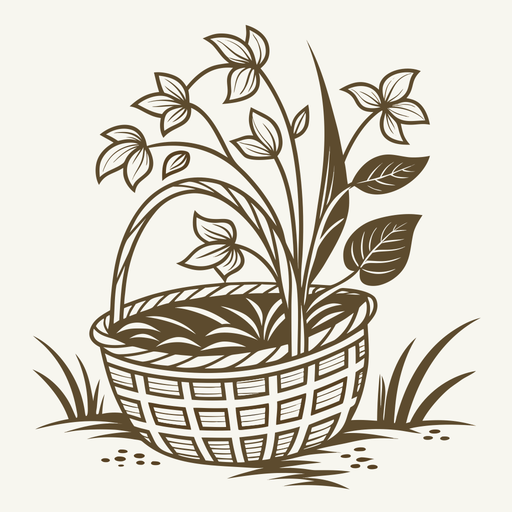
For businesses seeking to incorporate eco-friendly products into their offerings, private label natural fiber baskets present a compelling opportunity. Water hyacinth baskets, in particular, are increasingly popular due to their sustainability and aesthetic appeal. Handcrafted by small workshops in Central Java, Indonesia, these baskets are available at competitive wholesale prices, making them an attractive choice for retailers and wholesalers alike.
The Basics of Water Hyacinth Baskets
Water hyacinth (Eichhornia crassipes), an invasive plant originally from the Amazon Basin, serves as the primary raw material for these baskets. In Indonesia, particularly Central Java, the plant is harvested from rivers and lakes by local communities, offering a low-cost resource for basket production. The stems are dried and sometimes twisted into ropes before being handwoven over metal or rattan frames. This traditional craft has been practiced since the early 2000s, with workshops producing a wide range of basket styles including storage, laundry, and decorative planter baskets. The natural honey-brown tone of untreated water hyacinth adds a rustic charm to these products, ideal for home décor brands and hospitality projects.
Environmental and Ethical Considerations
The use of water hyacinth in basket weaving is not only cost-effective but also environmentally conscious. Being an invasive species, water hyacinth poses a threat to local ecosystems if left unchecked. Ethical suppliers emphasize responsible harvesting from infested waterways, thus contributing to environmental preservation. By converting this invasive weed into useful products, pressure on other natural fibers, such as rattan, is reduced. Buyers are encouraged to verify the sustainability practices of suppliers, ensuring that their procurement supports environmental protection. For more information on Indonesia’s environmental policies, visit the official government portal.
Market Dynamics and Pricing
The market for water hyacinth baskets is competitive, with numerous brands globally engaged in their sale. From McGee & Co. to Two’s Company, these baskets are marketed at retail prices ranging from US$50 to US$190 for sets of 2–4 pieces. In contrast, wholesale prices are significantly lower, with plain traditional baskets available for US$0.50–1.50 per piece for orders of 300 or more. More complex designs, such as decorative planter baskets, range from US$3.90–5.50 for minimum orders of 500 pieces. Suppliers typically require minimum order quantities (MOQs) of 200 to 500 pieces per design, depending on the complexity and size of the basket.
Production and Quality Assurance
The production process for water hyacinth baskets involves meticulous hand-weaving, with each piece inspected for quality. Standard checks include ensuring smooth weaving, uniform color, and the absence of cracks or mold. Given that water hyacinth is a natural fiber, finished goods must be thoroughly dried and stored in low-humidity conditions to prevent moisture damage. Suppliers often provide pre-shipment inspections, with photos or third-party QC reports verifying the quality before shipping. Buyers should confirm lead times with suppliers, as these can vary based on manual weaving capacity and raw material drying times.
Customization and Design Flexibility
One of the significant advantages of private label water hyacinth baskets is the ability to customize designs. Buyers can specify dimensions, shapes, handles, lids, and even lining fabrics. This flexibility allows brands to create unique product lines tailored to their target market. Suppliers offer at least two size options per model, with many providing custom dimensions upon request. This adaptability makes water hyacinth baskets a versatile choice for businesses looking to expand their product offerings in the home décor sector.
Logistics and Export Considerations
Exporting water hyacinth baskets from Indonesia involves compliance with standard customs, fumigation, and phytosanitary requirements. These baskets are typically classified under homeware/handicraft HS codes. Packaging involves wrapping each basket in polypropylene bags, nesting sets together, and packing them in multilayer corrugated cartons to prevent damage during transit. International buyers often request pre-shipment inspections to ensure product quality and compliance with importing country regulations. For detailed export guidelines, consult the Indonesian Ministry of Trade.
End-Use Applications
Water hyacinth baskets are marketed as eco-friendly storage solutions for various applications. Common uses include storing clothes, towels, toys, magazines, and kitchen items. They also serve as decorative covers for plant pots and are popular in hospitality settings for their aesthetic appeal. With their natural look and sustainable credentials, these baskets align with current consumer trends towards eco-friendly and artisanal products. For more insights into product applications, visit our water hyacinth planter basket page.
Conclusion: Enquire Today
Private label natural fiber baskets offer a sustainable and versatile addition to any product line. With competitive pricing and customization options, they are an attractive choice for home décor brands and retailers. To explore how water hyacinth baskets can enhance your offerings, contact us today. Visit our contact page for more information and to submit your enquiry.
Related guide: Unique Woven Baskets