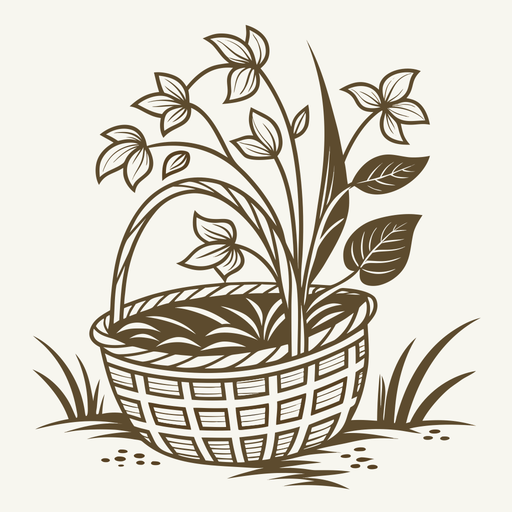
In the world of basketry, sustainability is increasingly important. Buyers are looking for eco-friendly options that don’t compromise on quality or aesthetics. Water hyacinth baskets from Central Java offer just this balance. These baskets, handwoven by skilled artisans, are a testament to how invasive species can be transformed into valuable products. Exported globally, they appeal to home décor brands, furniture stores, and hospitality projects.
Understanding Water Hyacinth as a Basket Material
Water hyacinth, scientifically known as Eichhornia crassipes, is native to the Amazon Basin but has become invasive in many parts of the world. In Indonesia, it is found in rivers, lakes, and canals, where local communities harvest it for handicraft production. The plant’s stems are dried and sometimes twisted into ropes, forming the primary material for basket weaving. This transformation of an invasive species into a useful product makes water hyacinth an ideal eco-friendly basket material. The natural honey-brown color of untreated water hyacinth adds aesthetic appeal to the baskets, enhancing their use as both storage solutions and decorative items.
Production and Export from Central Java
The production of water hyacinth baskets in Central Java is predominantly carried out by small and medium-sized workshops. These village-based weaving communities have been exporting baskets since the early 2000s, with the Bamboo Duck Factory brand being a notable example since 2001. Baskets are sold wholesale at prices ranging from US$0.50 to US$6.50 per piece, depending on design and complexity. Export buyers typically include home décor brands and retail chains. Suppliers are expected to demonstrate their production capacity and often provide factory certifications to assure buyers of their capability for international orders. Standard quality checks ensure smooth weaving and uniform color, with additional inspections often requested before shipping.
Design and Customization Options
Water hyacinth baskets are versatile, with a range of design options available to buyers. Common product categories include plain storage, laundry, decorative planters, and foldable baskets with handles. Many buyers request multiple sizes of the same design, and suppliers typically offer at least two size options or custom dimensions per model. Custom design development is widely available, allowing buyers to specify shapes, handles, lids, and lining fabrics. This flexibility in design makes water hyacinth baskets suitable for a variety of end uses, from home storage to decorative plant covers.
Environmental and Economic Impact
The use of water hyacinth in basket production has a positive environmental impact. By converting an invasive weed into useful products, it reduces pressure on other natural fibers like rattan. This practice supports local economies, providing a low-cost raw material for communities in Indonesia. Ethical suppliers focus on harvesting from infested waterways rather than cultivating the plant, aligning with sustainable practices. This approach not only provides economic benefits to local communities but also addresses the ecological challenge of managing an invasive species.
Pricing and Market Dynamics
Water hyacinth baskets are competitively priced, with indicative FOB prices for plain baskets ranging from US$0.50 to US$1.50 for orders of 300 pieces or more. Laundry baskets are priced at about US$2.50 to US$3.75 for 200 to 500 pieces, while decorative planter baskets range from US$3.90 to US$5.50 for orders of 500 or more. These prices reflect the complexity and size of the baskets, and suppliers often require minimum order quantities of 200 to 500 pieces. Retail prices for sets of baskets can range from US$50 to US$190, indicating a significant markup from wholesale costs.
Logistics and Quality Assurance
Exporting water hyacinth baskets involves compliance with phytosanitary and fumigation requirements, as they are classified under homeware/handicraft HS codes. Baskets are typically wrapped in polypropylene bags, nested, and packed in corrugated cartons for shipping. Buyers often request pre-shipment inspections to verify weaving quality and color consistency. Lead times for bulk orders are influenced by manual weaving capacity and raw material drying, so buyers should confirm realistic timelines with suppliers. International buyers can access detailed export statistics through reputable sources, highlighting the mature and competitive nature of this market.
Connecting with Suppliers
For buyers interested in eco-friendly basket materials, water hyacinth offers a sustainable and versatile option. To explore this further, visit our guides section or learn more about our eco-friendly baskets. Our experienced team can assist you in finding the right products for your needs, ensuring quality and sustainable sourcing. For inquiries or to place an order, please contact us today.
Artisan Skills and Techniques
The creation of water hyacinth baskets is an intricate process that involves skilled artisans who have honed their craft over generations. These artisans employ traditional weaving techniques, often passed down through families, to transform raw plant material into beautiful, functional items. The weaving process requires precision and patience, as each basket is crafted by hand to ensure a high level of quality. The artisans’ ability to innovate within traditional methods allows for the creation of a wide range of designs, meeting the diverse needs of global markets. This fusion of tradition and innovation not only preserves cultural heritage but also empowers local communities by providing them with sustainable livelihoods.
Challenges and Opportunities in the Industry
While the water hyacinth basket industry offers numerous benefits, it also faces challenges that require strategic navigation. One of the primary challenges is the seasonal availability of raw materials, as water hyacinth growth is influenced by environmental conditions. This can impact production schedules and necessitate careful planning. Additionally, the global market’s demand for sustainable products is both an opportunity and a challenge, as suppliers must consistently meet high standards for eco-friendliness and ethical production. However, these challenges also present opportunities for innovation, such as developing new treatment methods to extend the durability of the baskets or exploring partnerships that enhance supply chain resilience. By addressing these challenges proactively, the industry can continue to grow and thrive, contributing positively to both local economies and global sustainability efforts.
Future Trends in Eco-Friendly Basketry
As environmental awareness continues to rise globally, the demand for eco-friendly products, including water hyacinth baskets, is expected to grow. Future trends in this industry are likely to include increased emphasis on traceability and transparency, as consumers seek assurance about the origins and sustainability of their purchases. Additionally, technological advancements may lead to new treatment and finishing techniques that enhance the durability and aesthetic appeal of the baskets. Collaboration between designers and artisans is also anticipated to increase, leading to more innovative and diverse product offerings. As the industry evolves, maintaining a focus on sustainable practices and ethical production will be key to meeting consumer expectations and ensuring long-term success.