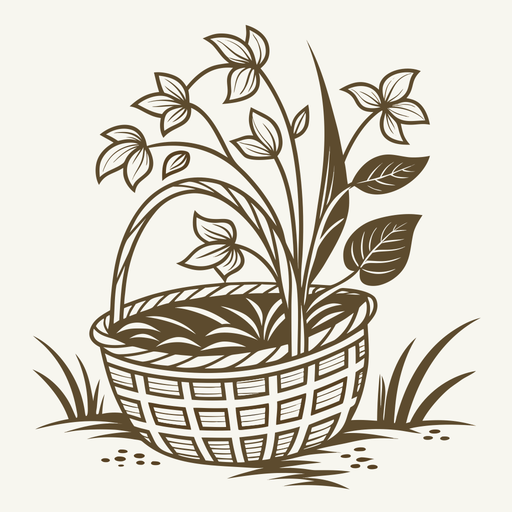
As a wholesale buyer, you’re constantly seeking high-quality, sustainable products that meet market demands. Water hyacinth baskets from Central Java present an ideal solution, offering both aesthetic appeal and environmental responsibility. This guide explores the emerging trends and practicalities of sourcing these natural fiber planter baskets, providing you with the insight needed to make informed purchasing decisions.
Understanding Water Hyacinth as a Raw Material
Water hyacinth, scientifically known as Eichhornia crassipes, is an invasive aquatic plant that serves as the primary raw material for these baskets. Recognized globally as a problematic species outside its native Amazon Basin, it poses environmental challenges that ethical suppliers aim to mitigate. In Central Java, Indonesia, the plant is abundant in rivers, lakes, and irrigation canals, offering a low-cost raw material option. Local communities harvest the stems, which are then dried and prepared for weaving. This process not only provides economic opportunities for small weaving communities but also contributes to ecosystem management by removing excess plant material from water bodies. The use of water hyacinth in basket weaving is a sustainable practice that reduces reliance on other natural fibers like rattan. Buyers interested in eco-friendly products will appreciate this sustainable aspect, as it aligns with growing consumer preferences for environmentally responsible goods. For more on the environmental impact, you can refer to the official Indonesian government sources.
Production and Craftsmanship in Central Java
The production of water hyacinth baskets in Central Java is predominantly carried out by small and medium enterprises (SMEs) and village-based weaving communities. With export experience dating back to the early 2000s, these workshops have honed their craftsmanship skills over decades. The process involves meticulous handweaving of dried water hyacinth stems, often twisted into ropes, over metal or rattan frames. This technique results in robust, structured baskets that are both functional and decorative. The characteristic honey-brown tone of untreated water hyacinth adds a natural aesthetic to any space. Typical products include plain storage baskets, laundry baskets, and decorative planter baskets. These baskets are sold wholesale at prices ranging from US$0.50 to US$6.50 per piece, depending on size and complexity. To ensure quality, standard checks focus on smooth weaving, uniform color, and the absence of defects like cracks or mold. For detailed specifications, visit our Indonesian Water Hyacinth Baskets page.
Market Applications and Buyer Preferences
Water hyacinth baskets are versatile, finding applications in various sectors such as home décor, furniture, hospitality, and retail. They are commonly used for home storage, including clothes, towels, toys, and kitchen items, as well as decorative covers for plant pots. Export buyers, including brands like McGee & Co. and Two’s Company, often request multiple sizes of the same design to cater to diverse consumer needs. Suppliers typically offer at least two size options or custom dimensions per model. Custom design development is widespread, allowing buyers to specify shapes, handles, lids, and lining fabrics. These features make water hyacinth baskets an attractive choice for those looking to offer unique, eco-friendly products. For insights into market trends, you can explore reputable international references like Trade.gov.
Cost and Pricing Structure
When considering water hyacinth baskets for wholesale purchase, understanding the cost and pricing structure is crucial. Prices are indicative, with plain traditional baskets ranging from US$0.50 to US$1.50 per piece for orders of 300 or more, and decorative/planter baskets priced at US$3.90 to US$5.50 for orders of 500 or more. Laundry baskets and storage baskets with lids are priced slightly higher. The minimum order quantity (MOQ) typically ranges from 200 to 500 pieces per design or size. These competitive prices, combined with the baskets’ eco-friendly appeal, make them a cost-effective choice for businesses looking to expand their product offerings. Potential buyers should confirm specific prices and MOQs with suppliers to ensure alignment with their procurement strategies.
Quality Assurance and Export Compliance
Ensuring quality and compliance is a top priority for buyers. Export-oriented suppliers are expected to declare their production capacity and may provide factory certifications or audits. Standard quality checks involve inspecting for smooth weaving, color consistency, and the absence of defects. Given that water hyacinth is a natural fiber, baskets are vulnerable to moisture, necessitating thorough drying and storage in low-humidity conditions to prevent mold. Export packaging involves wrapping each basket in PP bags, nesting sets together, and packing them in multilayer corrugated cartons with corner protection. Compliance with international phytosanitary and fumigation requirements is mandatory, ensuring that the products meet the importing country’s regulations. Buyers commonly request pre-shipment inspections to verify quality before shipping. For more on compliance, visit the Indonesia Trade Expo.
Lead Times and Supply Chain Considerations
Lead times for handcrafted water hyacinth baskets are influenced by factors such as manual weaving capacity and raw material drying. Buyers are advised to confirm realistic lead times with each factory, as these can vary significantly. Planning ahead is essential to accommodate any potential delays in production or shipping. The mature and competitive export market for water hyacinth baskets, with tens of thousands of shipment records, highlights the importance of effective supply chain management. Buyers should also verify the environmental responsibility of water hyacinth harvesting practices, given its invasive status. For insights into sourcing best practices, consider consulting sourcing agents specializing in the region.
Conclusion and Call to Action
Water hyacinth baskets from Central Java offer a sustainable, versatile, and cost-effective option for wholesale buyers seeking natural fiber planter baskets. Their eco-friendly appeal and diverse applications make them an attractive choice for various market sectors. To learn more about sourcing these baskets and to explore custom design options, visit our contact page and get in touch with our team. We are here to assist you in finding the perfect solutions for your business needs.
Related guide: Basket Storage Tips